In football, every position has its own responsibilities that help create balance across the team. While strikers stand out for their goalscoring ability and midfielders control the flow of play, the defensive line also features some very special roles. One of them is the sweeper, a position that once played an important role in many classic tactical systems. So, what is a sweeper, where do they play, and why was this role once considered the “last line of defense” in front of goal?
What Is a Sweeper?
A sweeper, also known as a libero or a free defender, plays behind the center-backs or the main defensive line. Unlike a conventional center-back, a sweeper does not necessarily mark a specific opposition player. Instead, their primary responsibility is to monitor the entire area behind the defense and deal with dangerous situations as they arise.
A sweeper can be thought of as the team’s final “cleaner.” When an opposing striker gets past the first defensive line, this player steps in to intercept the ball, cut out a pass, or stop the attack before the opponent can reach the goalkeeper.
When watching classic matches on Xoilac, viewers can easily recognize that the sweeper usually occupies a deeper position than the other defenders.
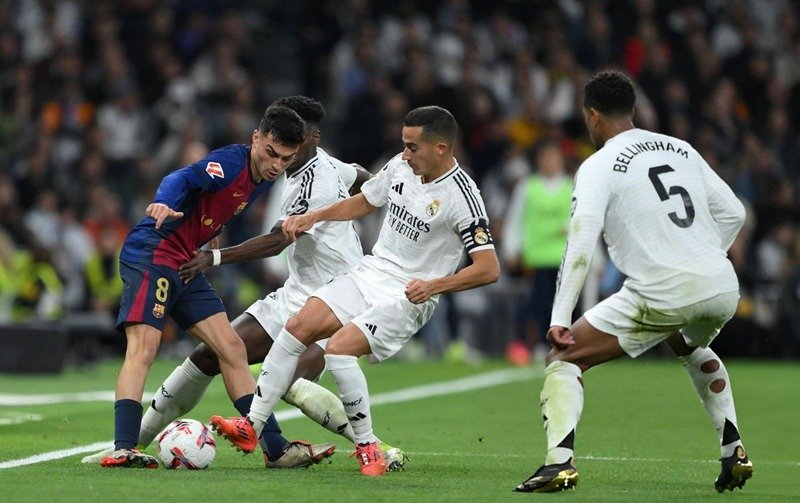
The Main Responsibilities of a Sweeper
A sweeper’s job goes beyond simply clearing the ball. An excellent sweeper needs outstanding game-reading ability to anticipate the opponent’s movements.
The first responsibility is providing cover. When a center-back leaves their position to close down a striker, the sweeper drops back to cover the space behind them. They can also intercept through balls or deal with loose balls after physical challenges.
Accuracy in passing can determine the course of a match. After regaining possession, a sweeper can move the ball forward into midfield to initiate a new attack. Therefore, a player in this role must be reliable defensively while possessing enough technical ability to help build play from the back.
The Essential Qualities of a Sweeper
An outstanding sweeper needs more than physical strength. Anticipation and positioning can sometimes be more important than charging into challenges.
Speed is another important factor because sweepers often have to cover the space behind the defensive line. If they react too slowly, opposing strikers can easily exploit the space and break through on goal.
Composure is also almost essential. One poor decision in the defensive third can create a dangerous scoring opportunity for the opposition. Those who regularly watch Xoilac TV will notice that excellent sweepers rarely rush their decisions, instead waiting for the right moment to intervene.

Distinguishing the Roles of a Sweeper and a Center-Back on the Pitch
The clearest difference lies in their defensive approach. Center-backs are generally responsible for defending specific areas or directly confronting opposing strikers, while sweepers position themselves behind the defensive line to cover the available space.
However, the distinction between these two roles is not always absolute. In modern football, many center-backs with strong game-reading and covering abilities have taken on some of the responsibilities traditionally associated with sweepers.
Therefore, when Xoilac 86 analyzes matches involving teams that use flexible defensive systems, viewers may see a center-back drop deeper and perform a role similar to that of a sweeper.
Why Has the Sweeper Gradually Disappeared?
The development of modern football has made the traditional sweeper less common than before. Today’s teams tend to prioritize pressing, zonal defending, and high defensive lines. This requires center-backs to maintain their positioning in relation to the players ahead of them rather than relying on a dedicated defender stationed behind the line.
Nevertheless, the sweeper’s underlying principles still exist in various forms. Center-backs who can read the game, pass accurately, and provide intelligent cover continue to perform many similar duties.
For those interested in tỷ lệ kèo cá cược, understanding how a team organizes its defense can also provide additional information when following the flow of a match. However, defensive tactics are only one of many factors to consider.

The sweeper concept has evolved into the advanced goalkeeper role in modern football.
The Sweeper in Modern Football
Today, the term sweeper is sometimes used to describe specialized approaches to playing out from the back, particularly when goalkeepers actively leave their penalty areas to support the defense. This is why viewers watching Xôi Lạc 86 may encounter the term “sweeper-keeper,” referring to a goalkeeper capable of operating like an additional defender.
This evolution shows that football is constantly developing. A position once considered fixed can be adapted to meet the demands of a faster game and new tactical requirements.
Conclusion
Understanding what a sweeper is helps fans appreciate football from a deeper tactical perspective. The sweeper once served as a crucial last line of defense, responsible for covering teammates, intercepting the ball, and dealing with dangerous situations at the back. Although the traditional role has become increasingly rare, the sweeper’s defensive principles continue to influence modern football.
When watching Xoi Lac TV, you can pay attention to how center-backs move, provide cover, and control space to recognize the influence of this position. For those following tỷ lệ kèo cá cược, understanding defensive structures also offers an additional perspective when analyzing matches. More importantly, understanding tactics makes every match more engaging and enjoyable to watch.
Read more related blogs on ShayariKiBate. Also Join WhatsApp Group for more updates.