Modern football is exciting because of its many tactical approaches. When exploring What Is a Counter Attack?, it can be understood as a fast attacking strategy that takes advantage of the moment when the opposition has just lost possession and has not yet reorganised its defence.
What Is a Counter Attack? in Football?
Basically, What Is a Counter Attack? refers to the way a team transitions rapidly from defence to attack immediately after regaining possession. Instead of keeping the ball for a long time, the team launching a counter-attack usually moves it forward with as few passes as possible.
The aim is to exploit the space behind the opposition’s midfield or defensive line. When xem truc tiep bong da on Xôi Lạc 365, viewers can recognise counter-attacks through forward passes, bursts of pace down the wings or strikers running in behind the centre-backs.
What Principles Does a Counter Attack Follow?
To understand What Is a Counter Attack? in greater depth, three factors are important: the timing of winning possession, the speed of moving the ball forward and the number of players involved in the attack. An effective counter-attack often begins when the opposition pushes its players forward and leaves space behind.
The player winning the ball must act quickly, while forwards and wingers need to accelerate immediately to stretch the defence. Xôi Lạc 365 helps viewers observe how different lines work together after regaining possession.
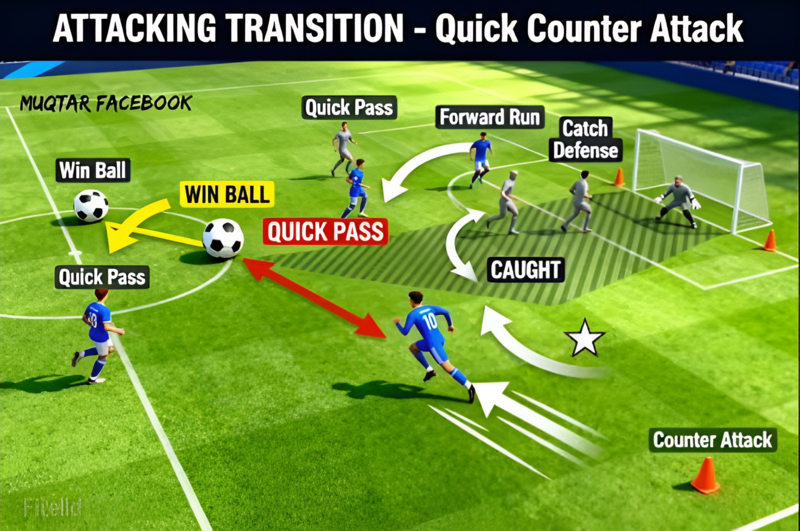
Factors That Make a Counter-Attack Effective
A team that understands What Is a Counter Attack? does not rely on speed alone. Decision-making is the most crucial factor. The player in possession must know when to pass early, when to carry the ball and when to wait for teammates to move forward.
The first pass after winning possession often determines the quality of the counter-attack. If the player takes too long, the opposition has time to recover; if the pass is rushed, the team may lose possession.
On Xôi Lạc 365, when xem truc tiep bong da, viewers can pay attention to the first pass during the transition and how the striker moves into space.
The Biggest Advantages of a Counter Attack
When analysing What Is a Counter Attack?, the clearest advantage is the ability to exploit space when the opposition is out of balance. Teams that dominate possession often push their full-backs and midfielders forward, leaving space behind them.
Counter-attacking allows a team to create clear chances without needing to dominate possession. Just a few accurate passes can put a striker in a goalscoring position.
Xôi Lạc 365 is suitable for viewers who enjoy following high-tempo matches. Fans can also use lịch thi đấu c1 to choose fixtures between teams that press aggressively and teams that counter-attack effectively.
What Are the Limitations of a Counter Attack?
Understanding What Is a Counter Attack? also means recognising its weaknesses. A team that relies too heavily on counter-attacks may struggle when the opposition deliberately drops deep and leaves little space behind its defence.
If the first pass is inaccurate, the counter-attacking opportunity disappears. In addition, sending too many players forward can leave a team vulnerable to a counter-attack of its own if possession is lost in midfield.
Fitness is also important because counter-attacks often require repeated high-intensity bursts of speed. Xôi Lạc 365 helps viewers recognise these differences when xem truc tiep bong da and spotting when a team begins to tire.

How Is a Counter Attack Different from a Fast Attack?
Not every fast attack is a counter-attack. The key to explaining What Is a Counter Attack? lies in the transition immediately after winning possession, when the opposition has not yet recovered its defensive structure.
A fast attack can begin with a goal kick or a deliberate attacking move. A counter-attack usually starts when a team wins the ball while the opposition’s formation is stretched.
When xem truc tiep bong da on Xôi Lạc 365, fans can distinguish between the two concepts by observing the opposition’s shape when the attack begins.
How Can Teams Defend Against Counter-Attacks Effectively?
To limit counter-attacks, the attacking team must maintain a defensive structure even while in possession. Midfielders need to hold their positions to block the first pass after possession is lost.
Some teams use counter-pressing immediately after losing the ball, while the defence must maintain appropriate distances between players and ensure that cover is always available.
Xôi Lạc 365 helps viewers observe these transitional situations. By combining this with lịch thi đấu c1, fans can choose matches featuring contrasting approaches to possession-based football and counter-attacking.

Which Positions Are Important in a Counter-Attacking System?
The defensive midfielder is often the first key link because they are responsible for winning the ball and passing it forward. Wingers need pace, while strikers must know how to find space between the centre-back and full-back.
A good counter-attacking team also needs a goalkeeper who can launch attacks quickly. An accurate throw or long pass can turn defence into attack within seconds.
Therefore, when exploring What Is a Counter Attack?, viewers should not focus solely on the striker. Xôi Lạc 365 helps them observe the entire process, from recovering possession to taking the final shot.
Read more related blogs on ShayariKiBate. Also Join WhatsApp Group for more updates.